The short answer
Is the Jinyeon royal performance worth it?
A good fit for anyone curious to hear Korean traditional instruments up close. Guests have scored it 4.9 across 106 reviews on GetYourGuide for an hour of music in a hanok-style room made to recall a Joseon royal banquet. It is short, seated and small, which favours quiet curiosity over a loud night out.
Six points to weigh
What you actually get
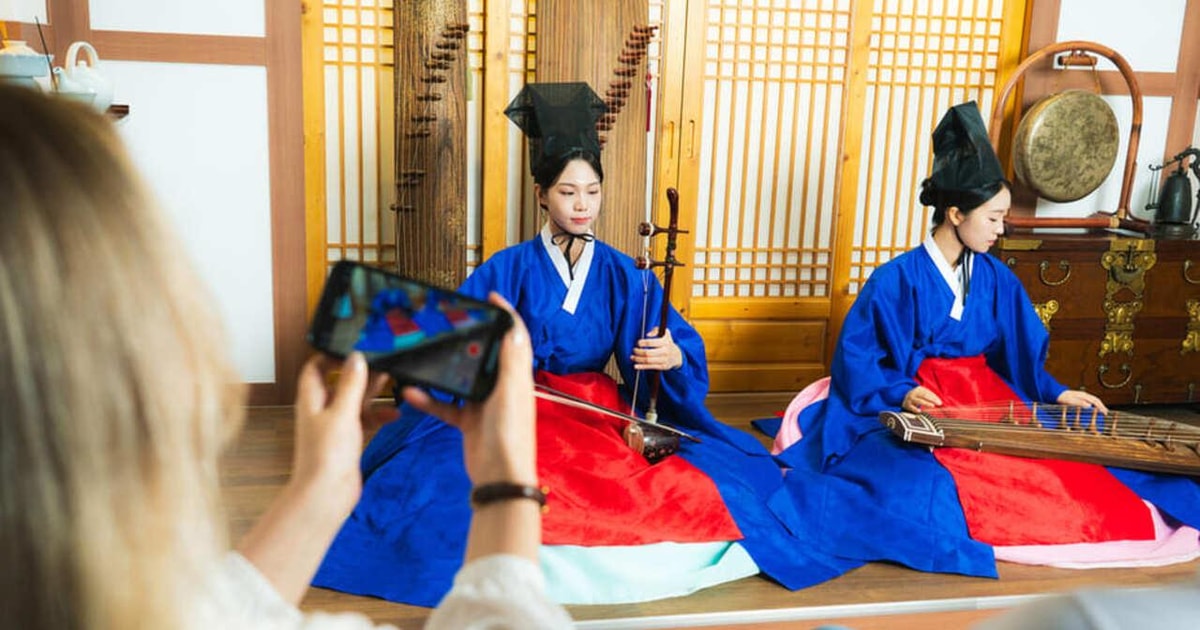
The booking page promises musicians playing traditional instruments across genres from court music to folk, a hanbok-and-replica-throne photo option, and a chance to meet the musicians afterwards. It does not list a programme or promise food or drink.
The room is tiny
Reviewers describe space for about ten spectators and musicians who explain each instrument. That closeness is the point of the booking, and the reason sessions can fill quickly.
Stairs, no lift
The room is one floor up, and according to the booking page there is no lift, which rules out wheelchairs. Phones go on silent, and parking is limited, so public transport is advised.
The banquet idea
Jinyeon was a celebratory banquet at the Joseon court. A 2008 Korea Journal study says Joseon had no theatres for pure art, so banquets were where music and dance had their stage.
Who should look elsewhere
Anyone who needs step-free access, a full evening, or a loud, theatrical show. A four-hour night palace and market tour, shown below, fills an evening in a different way.
Seven threads of court music
Seven threads of Joseon court music
The performance draws on a long tradition. Each card below condenses what Wikipedia, UNESCO and a 2008 Korea Journal study say about it, with the source named.
-
The banquet
A feast that doubled as a stage
Kim Jong Su, a researcher at the Kyujanggak Institute, writes that Joseon had no theatrical performances for purely artistic purposes, so royal banquets gave music and dance their place. Jinyeon, meaning offering a banquet, marked occasions such as holidays and birthdays.
-
The gayageum
Twelve silk strings and a sixth-century legend
Wikipedia describes the gayageum as a plucked zither, traditionally with twelve strings. The Samguk sagi, from 1146, credits King Gasil of Gaya, around the sixth century, who had the musician Wu Ruk write music for it.
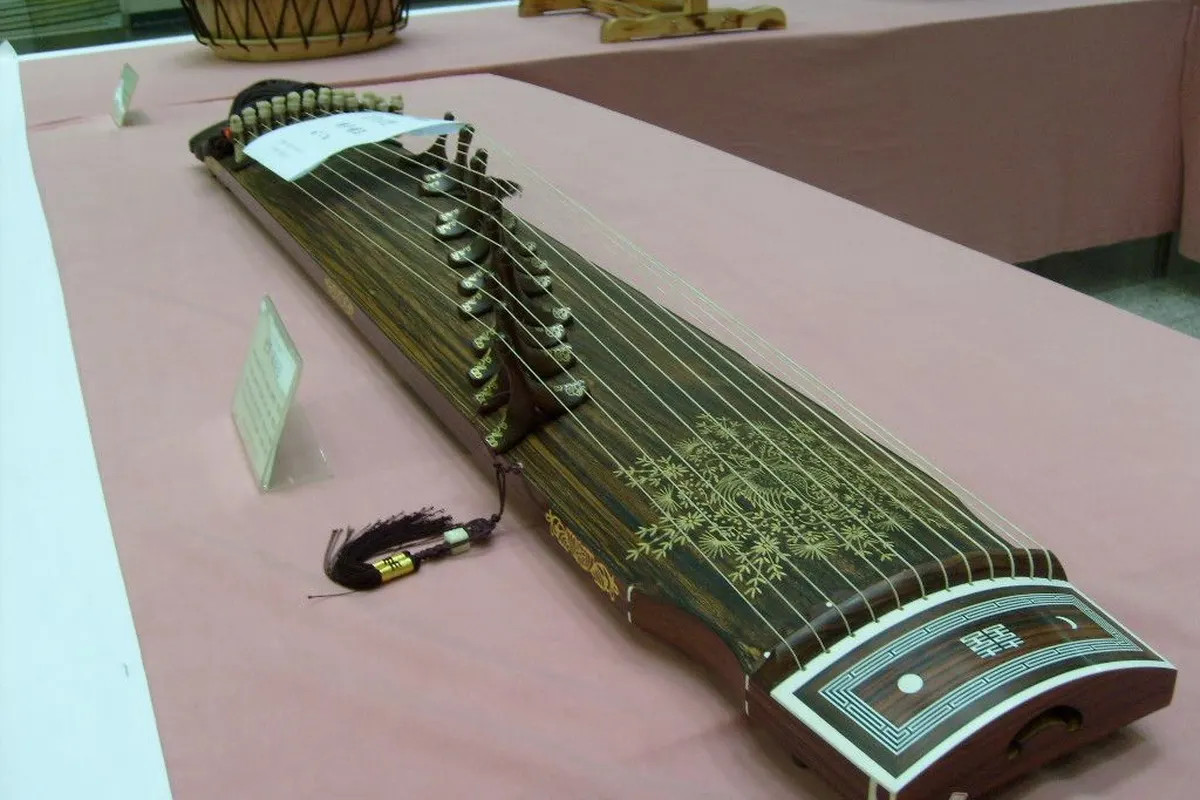
A twelve-string gayageum, with its movable bridges under the strings. -
The haegeum
A fiddle with only two strings
The haegeum is held upright on the knee and bowed, with two silk strings. Wikipedia says it is made from eight materials, which is why it is called paleum, and that in Joseon it served in ancestral rites, parades, festivals and banquets.
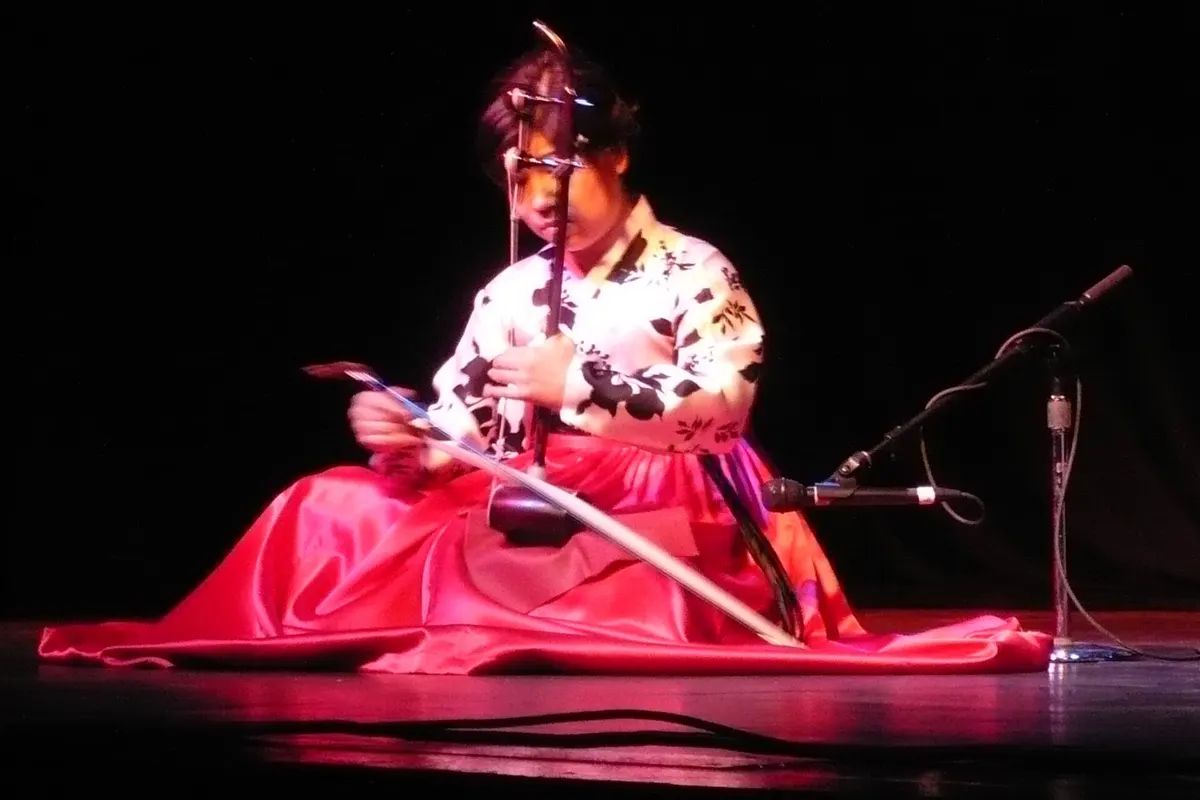
A haegeum player, the bow drawn across the instrument's two silk strings. -
The daegeum
The flute others tune to
A large bamboo transverse flute with a buzzing membrane. Wikipedia says its wide range and fixed pitch lead other instruments to tune to it, and that the longer jeongak form was the formal court version.
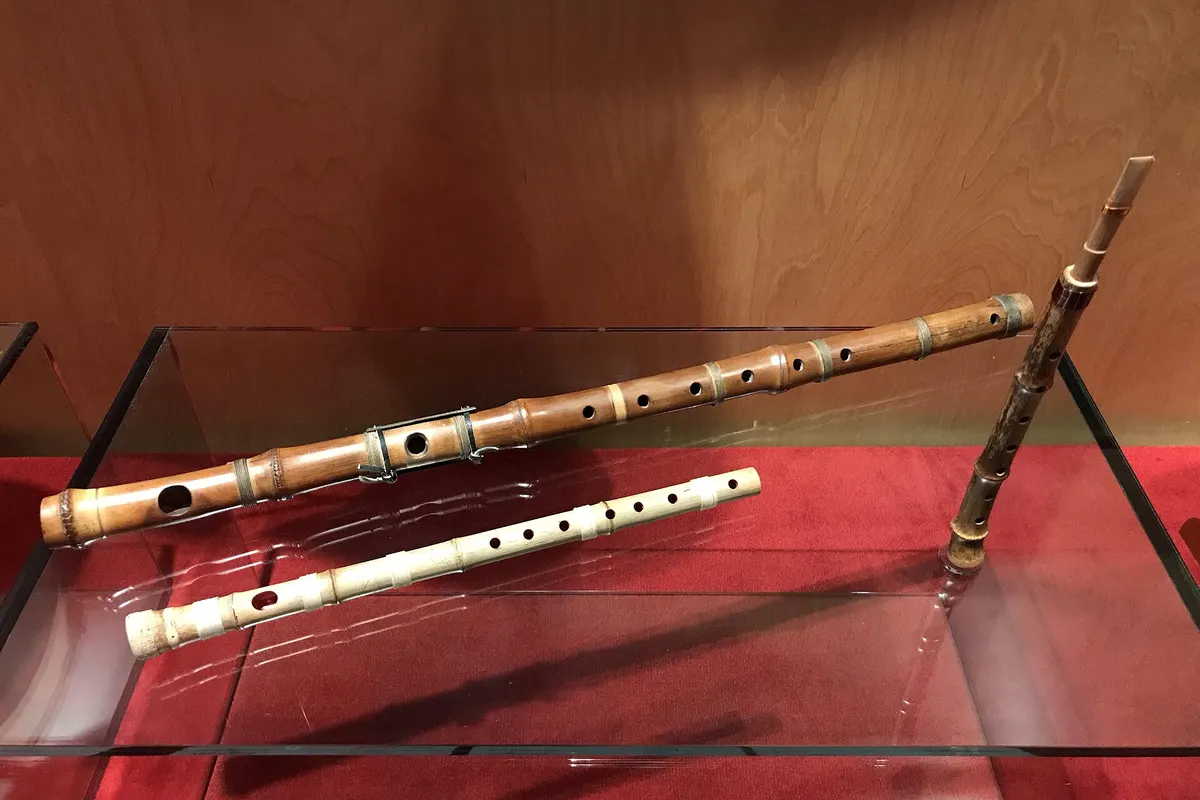
Bamboo flutes of the daegeum family in a museum case. -
The janggu
A drum with a different voice at each end
An hourglass drum with a thick-hide head for low tones and a lighter head for high ones. The pair is said to represent yin and yang, and a Goryeo record mentions twenty of them among banquet gifts in 1114.
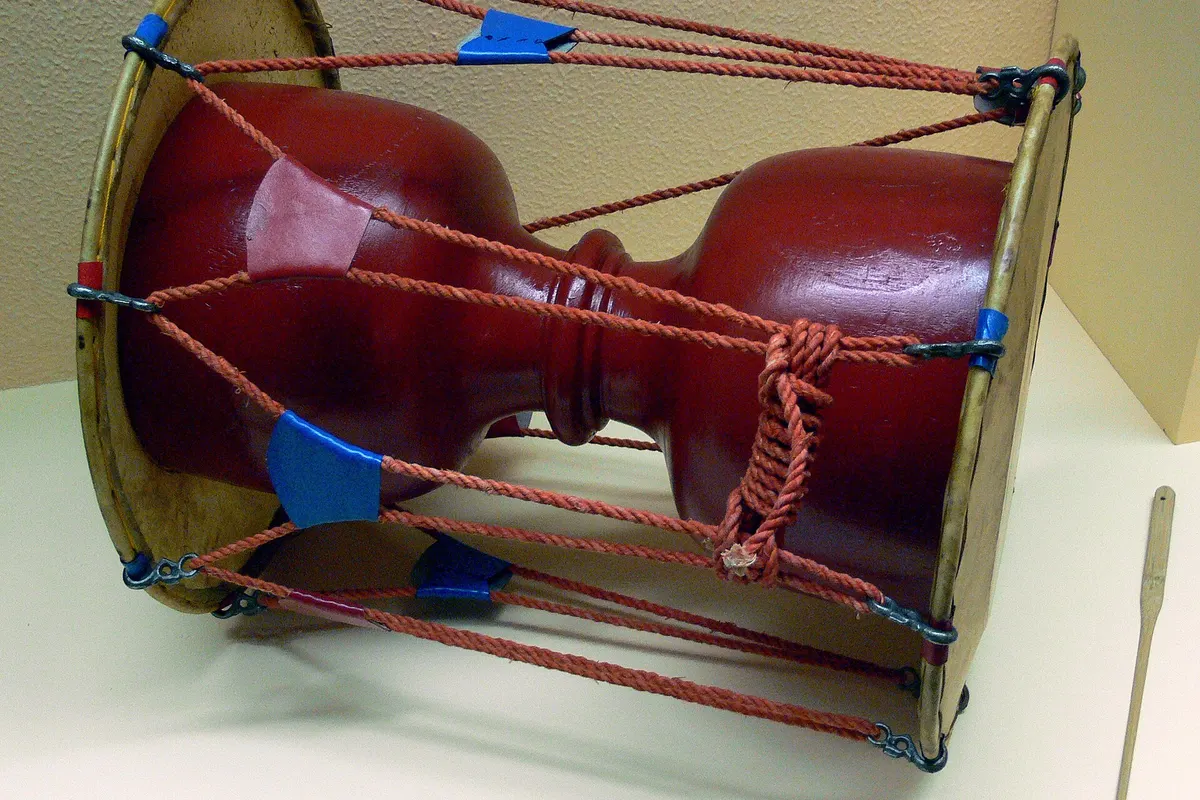
A janggu, the hourglass drum with a head at each end. -
The ritual
Jongmyo jeryeak and UNESCO
In 2008 UNESCO listed the Jongmyo royal ancestral ritual and its music as intangible heritage, noting it is held once a year, on the first Sunday of May, with 64 dancers in eight lines. It is the solemn cousin of banquet music.
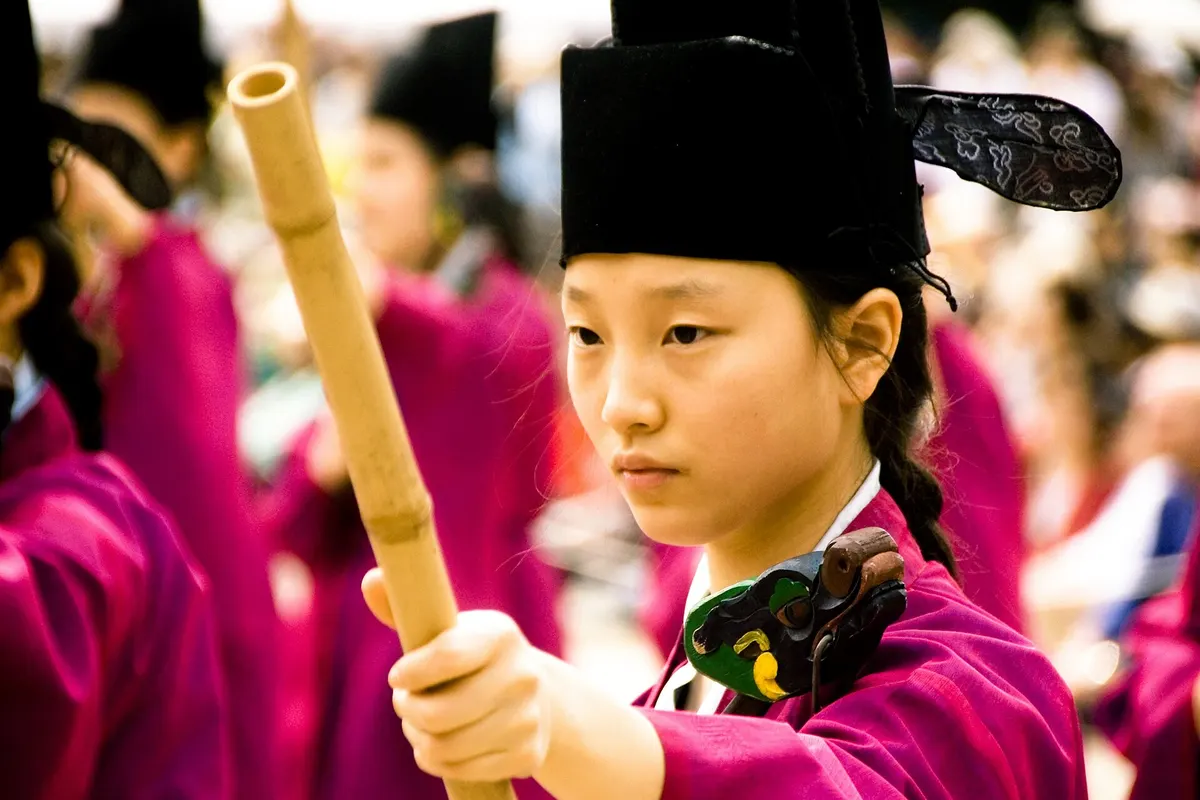
A dancer in the Jongmyo ritual, holding a flute-like prop. -
The dress
Hanbok, then and now
Wikipedia says hanbok is built from a jeogori top, baji trousers, a chima skirt and a po coat, with a structure traceable to the Goguryeo era. Modern hanbok mostly follows what the Joseon nobility and royalty wore.
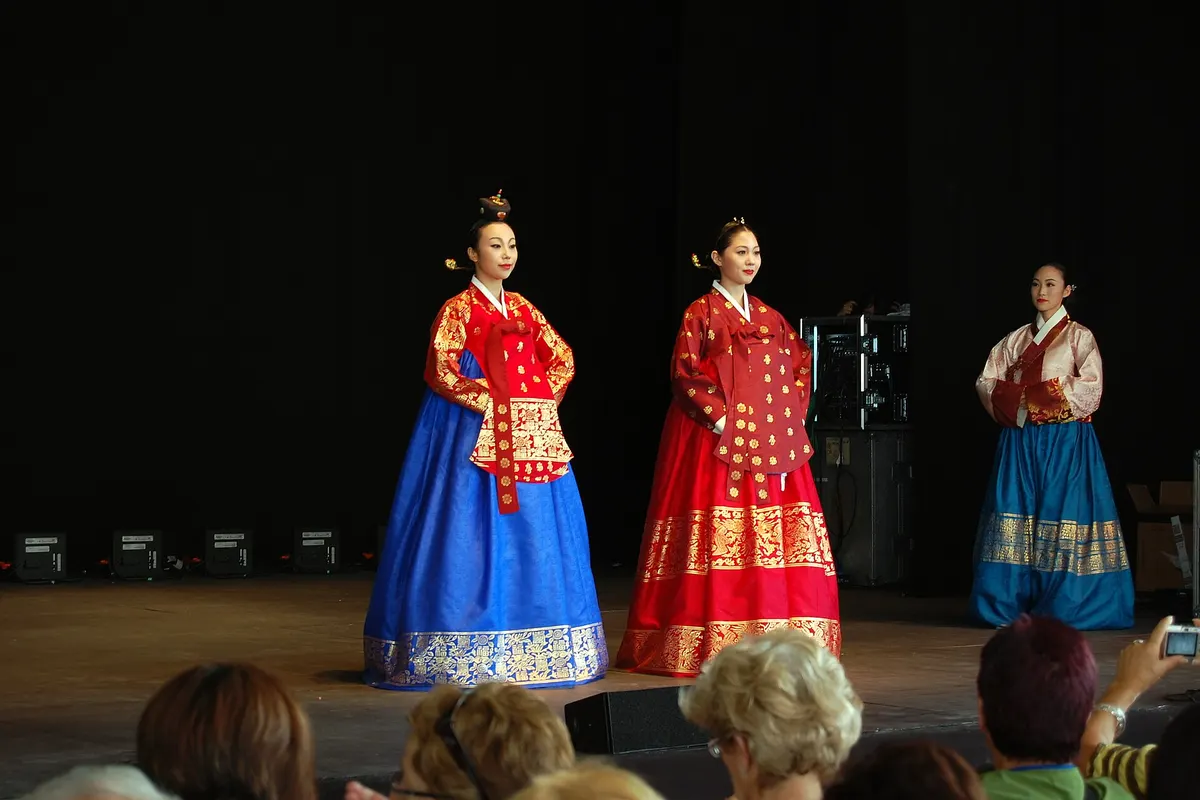
Court-style hanbok worn on stage.
Sources: English Wikipedia on the gayageum, haegeum, daegeum, janggu, hanbok, Jongmyo and Korean court music; UNESCO's Intangible Cultural Heritage listing for the Jongmyo rite; Kim Jong Su in Korea Journal 48(2), 2008. The booking page does not list a programme or instruments, so the cards describe the tradition, not a set list.
Court and banquet, in seven dates
Court and banquet in seven dates
- 6th century
The gayageum is developed in the Gaya confederacy
In the record: Credited to King Gasil in the Samguk sagi of 1146, as summarised by Wikipedia
- 1394
Jongmyo's main buildings go up under King Taejo
In the record: Wikipedia dates them to October 1394
- 1601
Jongmyo is rebuilt after the 1592 to 1598 invasions
In the record: The present complex dates from this rebuilding
- 1623
After King Injo's restoration regular royal banquets fade
In the record: Celebratory banquets continue only on special anniversaries, says Kim Jong Su
- 1902
Emperor Gojong's banquet at Hamnyeongjeon Hall
In the record: Twelve dances, music and rituals, reports the Korea Times
- 1995
Jongmyo Shrine becomes a World Heritage Site
In the record: The shrine is the oldest preserved royal Confucian shrine, says UNESCO
- 2008
The Jongmyo ritual and its music enter UNESCO's heritage list
In the record: It had been proclaimed in 2001, says UNESCO
Facts from the booking page
Six facts the booking page gives, and some it does not
Drawn from the booking page, read on 19 November 2026. Anything the page leaves unsaid is left unsaid here too, and the e-mail you receive after booking is the final word.
Check the calendar ↗The from-price below was the lowest found on checking. Pick a day to see the precise amount in your currency.
- The performance
- About one hour in a hanok-style room that recreates a Joseon royal banquet, with musicians playing traditional instruments from court music to folk.
- The extras
- Guests may dress in hanbok, sit on a replica royal throne, then meet the musicians and take photographs.
- Access
- One floor up, reached by stairs with no lift, which rules out wheelchairs.
- Rules
- Phones on silent. Parking is limited, so the booking page advises public transport.
- Sessions
- Start times are shown in the calendar, and the e-mail you receive after booking restates yours.
- Cancelling and payment
- You can cancel free of charge and settle payment after reserving, within the terms on the booking page.
A quiet hour or a four-hour night out
A court-music hour or a night palace and market tour?

Reserve the music, then plan the rest of Seoul
Other Seoul bookings to set beside it
The performance fills one hour. Three other Seoul bookings sit beside it: a night palace and market tour as the natural evening alternative, a half-day palace and hanbok outing, and the long DMZ day.
- See times ↗
Jinyeon: Korean royal performance experience
About an hour of traditional Korean music in a hanok-style room recreating a Joseon royal banquet, with optional hanbok and a replica throne.
- See times ↗
Night palace and market food tour with vehicle
A small-group evening outing of about four hours, riding between sights and tasting market dishes, judging by its title and summary. The natural rival for a Seoul night.
- See times ↗
Half-day highlights and palace tour with hanbok
A four-hour small-group walking tour of palace and hanok sights, with an optional hanbok, judging by its title. A daytime outing, so the evening stays free for music.
- See times ↗
DMZ tour with a defector Q&A
A long day trip from Seoul to the border area, judging by its title and summary. Plan it for a separate day from the performance.
Also bookable in Seoul
Before you go
Four things to settle before you go
Pick a session
Select a session in the calendar. The e-mail after booking brings back the time and the venue details, so nothing needs copying from here.
Plan for the stairs
The room is one floor up with no lift. Should anyone in your party struggle with stairs, pick another Seoul booking from the rail below.
Travel by public transport
Parking is limited, says the booking page, so plan your route by public transport and leave a margin before the start.
Decide about hanbok
Dressing in hanbok and sitting on the replica throne are optional. Decide beforehand whether you want the photographs, and keep your phone on silent during the music.
Instruments, ritual and room
Instruments, ritual and room
Real photographs from Wikimedia Commons: a gayageum player, a haegeum, a twelve-string gayageum, bamboo flutes, a janggu, the Jongmyo ritual and its main hall, court-style hanbok, a hanok lane, a palace at night and a food market.


Six deeper reads
Six reads on the music, the banquet and the room
- Start here Is the Jinyeon royal performance in Seoul worth it? A 4.9 from 106 reviews, read closely An hour of Joseon court music in a hanok room: who it suits, what it cannot give you, and how to decide before you pick a date. Read →
- The comparison A court-music hour or a night palace and market tour: which Seoul evening? A one-hour seated performance in a hanok room against a four-hour small-group night tour with a vehicle, set side by side on length, effort, food and what you take home. Read →
- The banquet What was a jinyeon? The Joseon royal banquet behind the show A celebratory court feast where music and dance had their stage, and the royal protocol books that recorded every cup, costume and instrument. Read →
- The instruments Gayageum, haegeum, daegeum, janggu: the Korean court instruments you may hear A plain-language guide to the zither, fiddle, flute and drum of traditional Korean music, with the facts that survive a fact-check. Read →
- The ritual music Jongmyo jeryeak: the royal ancestral music that sits behind Seoul's court sound UNESCO lists the Jongmyo rite and its music as intangible heritage; here is what that ritual is, when it happens, and how it differs from a show. Read →
- The practicalities Inside a hanok music room: hanbok, stairs and what to expect on the night How a small traditional-style room works, what the booking page asks of you, and the plain checklist for a smooth hour. Read →
FAQ
Questions worth settling before you reserve
Is the Jinyeon royal performance worth it?
Usually, if you like the idea of traditional Korean music from a few feet away. Guests have scored it 4.9 across 106 reviews on GetYourGuide. The hour is short and seated, so it rewards curiosity more than a wish for a big night out.
How long does it last?
Roughly an hour, as the booking page puts it. The calendar gives each session's start, and the e-mail after booking repeats yours.
Is it suitable for wheelchairs?
No. The room is one floor up, and the booking page rules out wheelchairs because there is no lift.
Do I have to wear hanbok or sit on the throne?
No. The booking page says guests may dress in hanbok and sit on a replica royal throne. Both are optional.
How many people does the room hold?
The booking page does not give a capacity, but reviewers describe space for about ten spectators. If you are a larger group, reserve early.
Which instruments will I hear?
The booking page says traditional instruments are played, without a list. The booking photograph shows a haegeum and a zither of the gayageum family, and reviewers say the musicians explain each instrument.
Can I drive there?
Parking is limited, and the booking page advises public transport.
Should I silence my phone?
Yes. The booking page asks for phones on silent.
Is food or drink included?
Nothing on the booking page promises food or drink, so eat beforehand or afterwards.
Can I cancel?
Yes, within the terms on the booking page: cancelling is free of charge and payment comes after you reserve.